You have 0 items in your cart


TN Pools LeisureScapes · Eastern Ontario Hot Tub Guide
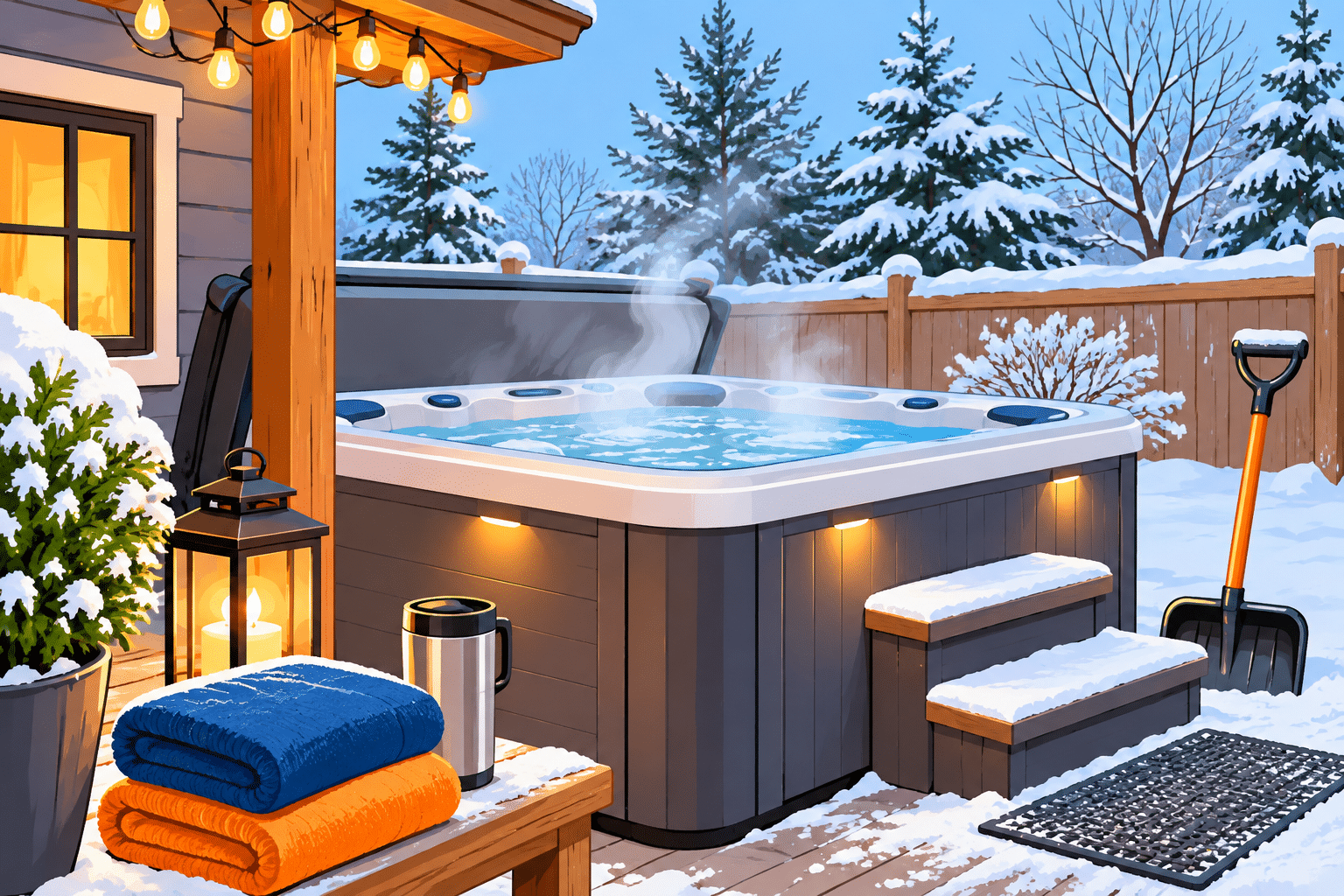
Your first cold season is much easier when you know what actually deserves attention. This guide covers water level, filters, covers, snow, travel, power outages, drain-and-refill timing and what to do if your spa stops heating — then builds a personalized winter routine around your hot tub and how you use it.
Start before the deep cold
A filled hot tub in an Eastern Ontario winter is not just a warm tub sitting outside. It is a small recirculating water system that depends on reliable power, normal water flow, adequate water level and insulation. If those pieces stay healthy, winter ownership can feel surprisingly routine. If one of them fails during freezing weather, the timeline for dealing with the problem becomes more important.
Before the coldest stretch arrives, learn what “normal” looks like for your own spa. Know its usual operating sound, the normal water line, the temperature it typically maintains, what the control panel shows when everything is fine and how often your household normally needs water care. That baseline makes it much easier to spot a problem early.
Your first-winter priority
If a drain/refill, deep filter cleaning, cover replacement or service issue is already due, early winter is the easier time to deal with it. Beachcomber’s current winter-care guidance specifically recommends starting the cold season with fresh water and clean filters rather than waiting for deep-freeze weather.
Winter routines are not identical across every brand, control system, sanitizer or electrical setup. Keep the exact manual for your model handy.
Low water can interfere with circulation and heating. Use the manufacturer’s fill level rather than guessing from the shell.
A cover that is cracked, sagging, heavy or no longer sitting properly can lose heat faster and deserves attention before the coldest weather.
Plan for snow and ice between the house and spa. Winter maintenance is easier when you can safely reach the cover, controls and equipment area.
Know your setup
TN Pools currently carries both ŌWOW and Beachcomber hot tubs, including plug-and-play and 240V options. The winter routine below asks about brand and electrical setup because those details can affect the advice that matters most.
Keep the spa connected exactly as the manufacturer specifies and pay attention to temperature recovery after long winter soaks. TN notes that the ŌWOW FANTOM can be upgraded from 120V to 240V for stronger cold-weather heating performance.
Dedicated 240V spas are common for larger or higher-output systems. The owner’s manual and electrician-installed setup remain the source of truth for breaker, disconnect and operating requirements.
Vacation modes, freeze protection, filtration schedules and app monitoring vary. Do not copy settings from another brand just because the tubs look similar.
Never use an extension cord, bypass a GFCI/breaker or alter spa wiring unless the manufacturer’s instructions and applicable electrical requirements specifically allow the setup.
A simple winter rhythm
The goal is not to hover over the spa every day. It is to notice small changes before they turn into cold-weather problems.
Check the water level, clarity and smell, then test the water with the method recommended for your sanitizer system. Winter does not cancel normal water care. Heavy use, extra bathers, lotions and long holiday weekends can all increase the demand on the water.
Use current test results and product directions instead of treating by appearance alone. Never mix pool/spa chemicals together, and never combine products in the same container.
Make sure the displayed temperature makes sense for the set temperature and that water movement looks normal. A hot tub that is slowly losing heat, showing a flow warning or sounding different is easier to investigate while it is still warm than after it has been cold for hours.
Filters collect body oils, debris and the material your water-care routine removes from the water. A dirty filter can reduce flow and make water care harder. Follow the cleaning frequency for your cartridge and system rather than assuming one schedule fits every spa.
Snow, ice and the cover
A good cover does several jobs at once: it slows heat loss, keeps debris out and protects the water from weather. Winter is also when a weak cover becomes easiest to notice. If it feels much heavier than it used to, has visible damage, sags toward the water or no longer sits evenly around the shell, it may be losing insulating performance.
Do not wait for an extreme storm to think about snow load. Clear accumulating snow using a cover-safe method recommended by the cover or spa manufacturer. Avoid sharp tools that can puncture the vinyl, and never stand or sit on the cover. Beachcomber also cautions that unusually heavy snow can place significant weight on a cover.
Check the cover for excessive buildup, make sure the skirt and straps are not frozen into an awkward position, and clear a safe route to the spa.
Watch for ice around steps and the access path. Do not force frozen cover hardware. Let ice release safely rather than tearing straps or vinyl.
Waterlogged foam can reduce insulation and make the cover difficult to handle. TN Pools offers made-to-fit replacement covers for spas that are ready for an update.
Weekend away or winter vacation
For a spa that is designed to operate through winter, shutting the power off before a trip is generally not the safe shortcut people imagine. A filled spa still contains water in its plumbing and equipment. In freezing weather, losing heat and circulation can create a freeze-damage risk.
Before leaving, bring the water to the proper operating level, confirm normal heating and circulation, deal with a dirty filter, balance the water using your normal approved system and secure the cover. If your spa supports remote monitoring, make sure it is connected and that alerts are actually reaching you.
For longer trips, arrange for a responsible person to physically check the spa. A phone app can tell you a lot, but it cannot remove snow, notice water on the ground or confirm that a cover is sitting properly.
Planning to shut it down instead?
Residual water can remain in pumps, heaters and lines after the visible tub is empty. If you will not operate the spa through freezing weather, follow the exact manufacturer winterization process or arrange professional help rather than guessing.
When something stops working
There is no universal number of “safe hours” before freeze damage. Outside temperature, wind, water volume, insulation, plumbing layout and the type of failure all matter. A filled spa that loses both heat and circulation during an Eastern Ontario cold snap deserves prompt attention.
Water changes in cold weather
The easiest winter refill is usually the one you do before the harshest weather arrives. Water age, bather load, water quality and the manufacturer’s maintenance schedule all matter, so a calendar alone should not decide when your spa needs fresh water. Beachcomber’s owner guidance discusses periodic drain-and-refill maintenance and recommends doing winter preparation before deep cold.
If the water is already difficult to manage, the filter is due for deep cleaning, or your normal drain/refill interval will land in the coldest part of the season, review the timing before temperatures plunge. During freezing weather, a drained or partially drained spa can introduce extra freeze risk if water remains in lines or equipment. Follow the model-specific fill, drain and priming procedure every time.
Personalized winter routine
Tell us what kind of spa you have, how often you use it and what your winter looks like. The routine changes for plug-and-play vs. 240V setups, ŌWOW vs. Beachcomber vs. another brand, heavy use, exposed backyards, aging covers, travel and overdue maintenance.
Your custom plan will appear here
You’ll get a personalized weekly checklist, monthly checklist, snowfall/cold-snap plan, travel plan, maintenance timing and “if the heat stops” emergency steps.
First-winter questions
For a filled hot tub operating through winter, normally keep it powered and operating according to the manufacturer’s instructions. Turning it off removes active heating and circulation. If you want the spa shut down for the season, use the complete model-specific winterization process rather than simply switching off the power.
A quick weekly check of water level, water-test results, heat, circulation, filter condition and cover condition is a useful baseline for many owners. Heavy use, extreme weather, travel or an existing problem can justify checking more often. Your personalized routine above adjusts the cadence based on your answers.
Do not allow unusually heavy snow to accumulate indefinitely. Use a cover-safe removal method, avoid sharp tools and do not stand on the cover. If your property regularly gets drifting snow, include a cover check after major storms rather than waiting for your normal weekly routine.
Top up normal loss to the manufacturer’s operating level, but do not ignore a continuing or unexplained drop. Mark the level, watch for visible moisture and arrange service if the spa appears to be leaking. A water-loss problem becomes more urgent in freezing weather because circulation and heating depend on adequate water.
Use only the vacation, economy or temperature settings recommended for your exact spa. Do not copy a setting from another hot tub. The important winter principle is to preserve the model’s required freeze protection, circulation and water-care plan while you are away.
Some plug-and-play spas are designed for year-round use, but electrical configuration can affect heating performance. TN specifically notes that the ŌWOW FANTOM can operate at 120V and can be upgraded to 240V for stronger cold-weather heating performance. Confirm the exact behaviour and requirements for your model.
Arrange professional help for repeated breaker trips, burning smells, electrical concerns, active leaks into the equipment area, persistent flow or heater errors, abnormal overheating, or loss of heat and circulation during freezing weather. Do not bypass safety devices or open energized equipment.
Local winter support
TN Pools LeisureScapes serves Alexandria, Cornwall, SD&G, Prescott & Russell, Ottawa and surrounding Eastern Ontario communities with hot tubs, water-care supplies, replacement covers and professional hot-tub service.
General educational information only. Always follow your hot tub owner’s manual, electrical requirements, water-test results and product labels. Do not work on energized spa equipment, bypass protective devices or mix spa chemicals. If a filled spa loses heat or circulation during freezing weather, contact qualified service promptly.